CTV Advisory Board: Emmanuel Crego on data collaboration,
programmatic TV, and the future of CTV
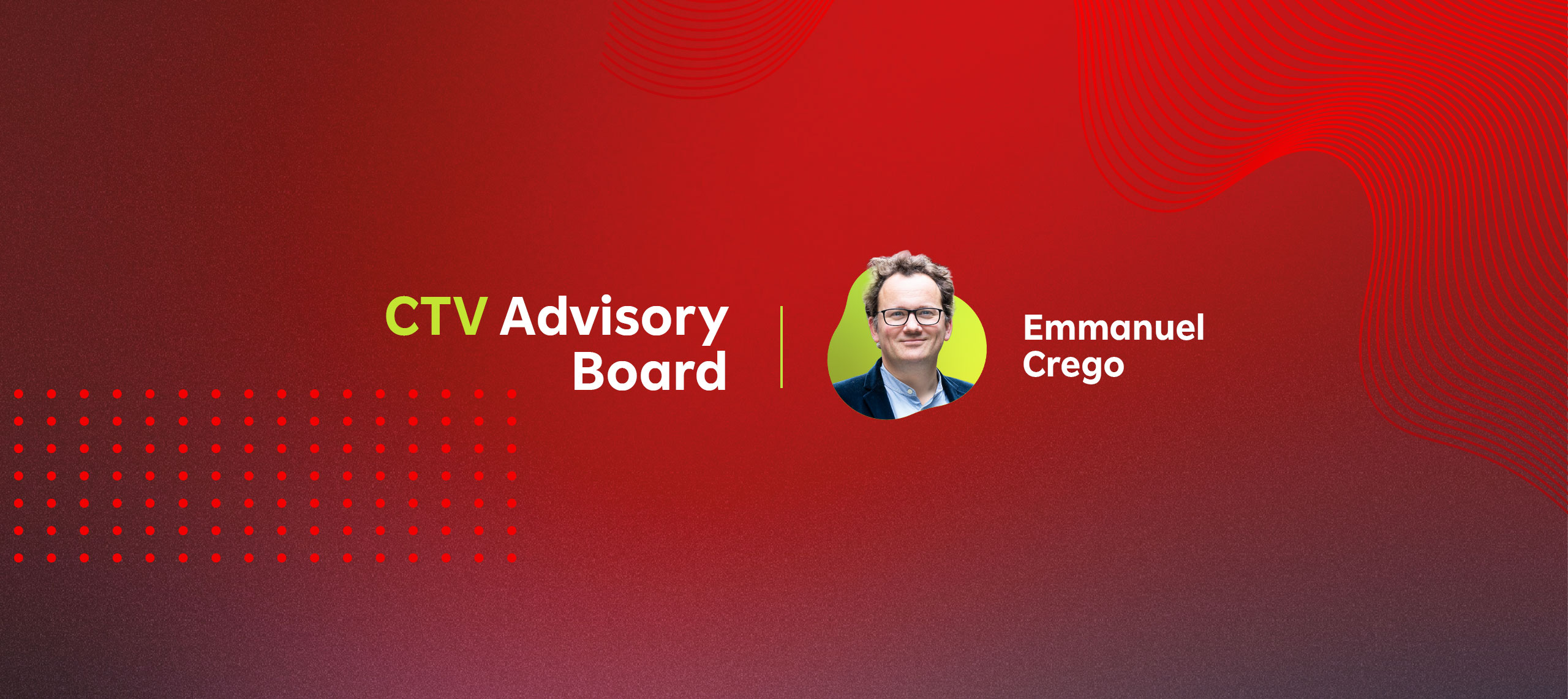
As part of Rakuten TV Enterprise’s CTV Advisory Board series, we spoke with spoke with Emmanuel Crego about the role of Connected TV within the wider television ecosystem, the impact of programmatic buying, evolving viewing habits, and the importance of collaboration across data, technology, and agencies.
The Rakuten TV Enterprise CTV Advisory Board brings together leading voices from across the industry to explore the trends and challenges shaping the future of streaming and advertising.
About Emmanuel Crego
Emmanuel Crego is General Manager of Groupe Values, an independent media agency group in France. He has led the business since 2017, following previous roles managing AOL France’s programmatic and technology unit and serving as Head of Business Development at TF1.
Q1: How would you describe CTV’s role in the TV ecosystem today?
For Crego, Connected TV complements rather than replaces traditional television.
While linear TV continues to deliver broad reach, he believes CTV’s value lies in its ability to bring more sophisticated audience targeting to the largest screen in the home.
As advertisers increasingly look to balance scale with precision, CTV offers an opportunity to combine television’s impact with behavioural and interest-based targeting capabilities
“I think that CTV is a complimentary thanks to the targeting capabilities on behavioural interest”
Q2: What impact has programmatic had so far?
According to Crego, programmatic has played an important role in simplifying workflows and creating greater connectivity between agencies, publishers, and data partners.
He believes its greatest contribution has been helping the industry move away from fragmented buying approaches and towards more unified activation strategies.
At the same time, he notes that further collaboration across publishers and data providers will be needed to unlock the full potential of programmatic TV buying.
“Programmatic is interesting in the way that it’s trying to break silos to facilitate things.”
Q3: How are viewer habits changing?
Crego points to the growing importance of smart TV environments as consumers access content through an increasing number of connected experiences.
However, he notes that viewing behaviours and distribution models can vary significantly across markets, with France remaining heavily reliant on set-top boxes.
For him, the bigger challenge is ensuring that audience data can be activated across multiple publishers and ecosystems rather than remaining isolated within individual platforms.
“What is really interesting is how we break the silos once again on the data perspective.”
Q4: Looking ahead, what do you think will matter most for CTV success?
For Crego, the future success of CTV will depend on the industry’s ability to improve collaboration across data, technology, and organisational structures.
He believes data collaboration remains one of the most important priorities as advertisers seek more consistent and scalable audience activation.
He also highlights the need for agencies and media organisations to rethink traditional operating models, bringing together teams that have historically worked across separate channels and disciplines.
“CTV success in the future first is break the silos on the data perspective.”
As new technologies and buying approaches continue to emerge, Crego sees significant opportunities for the industry to create more efficient, data-driven ways of planning and activating television campaigns.
As Connected TV continues to evolve across Europe, the industry is increasingly focused on creating greater interoperability across data, technology, and buying processes.
For Emmanuel Crego, the future of CTV will be shaped by collaboration. From data sharing and audience activation to agency structures and technology partnerships, success will depend on the industry’s ability to break down silos and build a more connected ecosystem for advertisers, publishers, and viewers alike.